
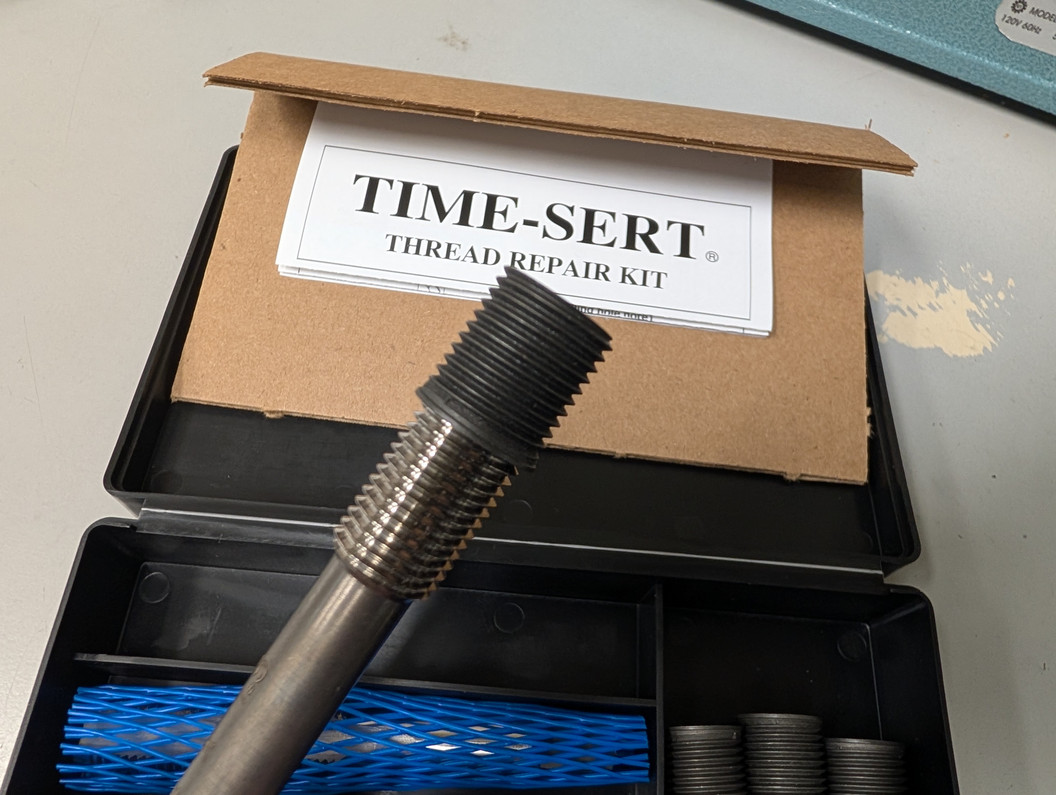
Why Your Time-Sert Driver Gets Tight Early
If you use Time-Sert kits frequently, you might be used to the insert screwing onto the driver almost all the way before meeting resistance. However, we’ve recently had reports from technicians—specifically those using the 11127 inserts—noticing the driver tightening up much earlier than they expected.
Whether your driver threads in 90% of the way or only catches one or two threads before it gets tight, both scenarios are completely normal. Here is the technical breakdown of why this happens and how to ensure a perfect installation.
Understanding the "Tight Fit"
It is a common misconception that every insert should screw onto the driver by hand until it's nearly to the bottom. In reality, due to plating variations and manufacturing tolerances, the fit can change from batch to batch.
- Variable Thread Depth: Sometimes the driver will thread in nearly 90% of the way, and other times it may only go 1 or 2 threads before it gets tight and requires a wrench. This is common even on very small or short inserts.Built to Gauge: Time-Sert manufactures inserts to fit precise master gauges, not the installation driver itself.
- The Driver’s Job: The tip of the driver and insert are designed to expand the bottom few threads of the insert. This "swedging" action is what locks the insert permanently into the hole.
- Tool Strength: The driver tool is incredibly rugged. As long as it doesn't "bottom out" in the hole, it is not going to break under the torque required to seat the insert.
The "Driver Check": Your Pre-Install Insurance
Since the driver will be doing some heavy lifting to expand those threads, you need to make sure it has enough "runway" to work.
- Check Before Installing: Before you put the insert on the driver, place the driver alone into the hole.
- Verify the Line: Make sure the driver can reach the depth mark (the line you mark on the tool). This confirms visually that the tool will not hit the bottom of the casting.
- Use Driver Oil: Never install dry. Use the recommended Insert Driver Oil (J-42385-110) or motor oil as an alternative to lubricate the driver as it expands the threads.
The Bottom Line: If the driver does not go past your mark, it is perfectly safe to proceed with the usual force. Whether it starts getting tight at two threads or ten threads, just keep turning until the driver spins looosely—that tells you the bottom threads have been expanded and the lock is set.
Don't let batch variations or a tight-feeling insert worry you. As long as you’ve verified the depth and used your driver oil, the tool is designed to handle the pressure.
Recent Posts
-

Polyurea vs Epoxy Garage Floor Coating: Best Resurface for Garage Floor?
Here at WiseAutoTools.com, we usually cover things like spark plug thread repair and other aluminum …26th Feb 2026 -
Stripped Chevy Starter Bolt Threads?
A recent customer reached out after installing a rebuilt engine from Jasper Engines in a Chevy. The …19th Feb 2026 -
Why Your Time-Sert Driver Gets Tight Early
If you use Time-Sert kits frequently, you might be used to the insert screwing onto the driver almos …6th Feb 2026