
Why Time-Sert Tooling Have Square Ends
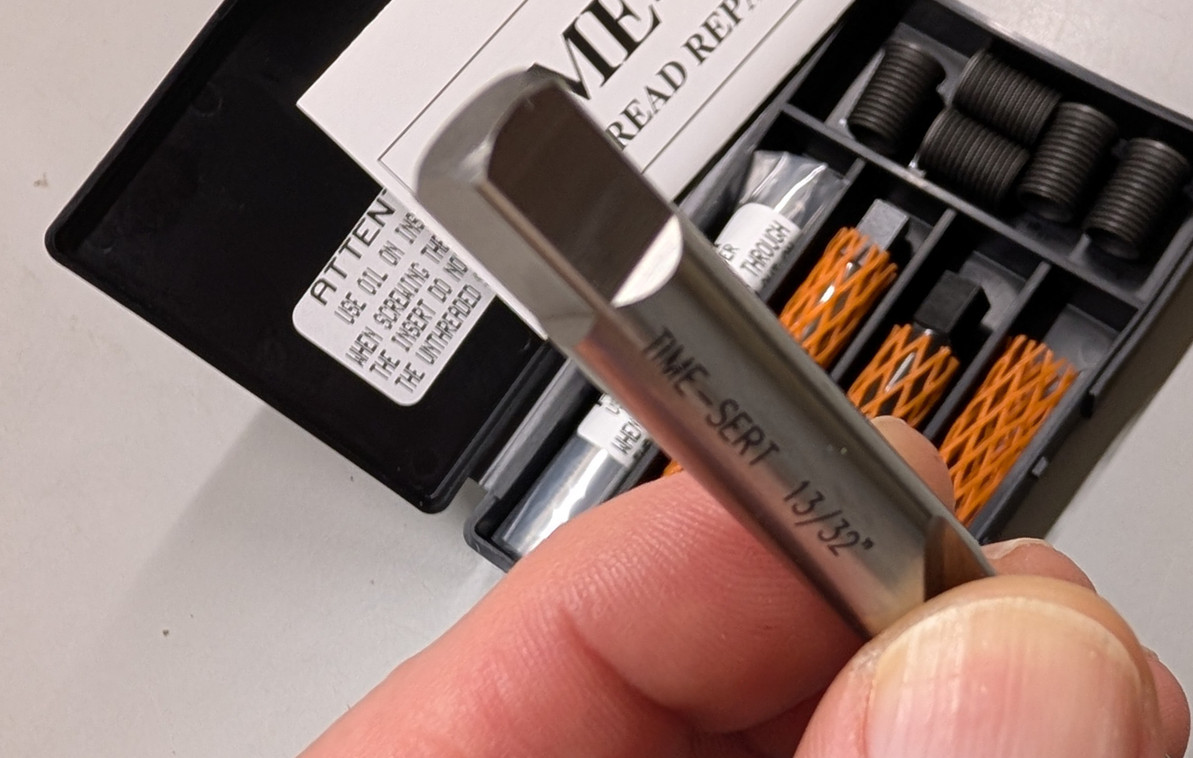
When unboxing a Time-Sert thread repair kit—such as the popular 1015 kit or other engine-specific thread repair sets—one of the first things technicians notice is the geometry of the cutting tools. Rather than featuring a fully round shank like standard jobber drill bits, Time-Sert drill bits, counterbores, taps and driver tools are engineered with square ends.
This design choice is not accidental; it is a fundamental engineering feature designed to maximize torque transfer, improve manual control, and solve tight-clearance access challenges in modern automotive repair environments. And by "environments" we are referring to engine bays that you'd be hard pressed to install one more component and still be able to close the hood!
1. Superior Non-Slip Torque Transfer
Reaming out damaged aluminum or steel threads generates significant rotational resistance. Standard round-shank bits rely purely on friction inside a smooth drill chuck. Under heavy load, round shanks frequently slip, marring the tool bit and causing heat buildup. The square drive end creates a positive mechanical engagement, ensuring 100% of the rotational force is transferred directly to the cutting edges without slippage.
2. Flexible Drive Options: Tap Wrenches and Standard Sockets
The primary advantage of a square shank is tool flexibility in tight engine compartments. While standard T-handle tap wrenches clamp directly onto square ends, modern automotive repairs often don't afford the clearance required to swing a full T-handle.
Because of this, technicians frequently use standard hand-tool sockets directly on the square ends of Time-Sert tooling:
- 12-Point Sockets: A standard 12-point socket grips the 4-cornered square end cleanly and offers double the indexing positions of a 6-point socket, making it ideal for tight spaces with limited wrench swing.
- 1/4-Inch Drive Sockets: On smaller Time-Sert kits (such as M5, M6, or 10-32 thread sizes), the square shank fits into small 1/4" drive 12 point sockets, enabling fine manual control with miniature ratchets or thumb wheels.
- 3/8-Inch Drive Sockets: Medium-to-larger kits utilize square shanks that pair with standard 3/8" drive sockets and extensions, allowing technicians to reach deep into recessed areas like spark plug wells or head bolt holes.
- Tap Sockets: Specialized tap sockets with internal O-rings or retention clips fit square shanks precisely and connect to standard 3/8" or 1/4" ratchet extensions. Although it's hard to beat the cost effectiveness and convenience of using 12 point sockets, since many techs already have those in their arsenal.
3. Compatibility with Drill Motors and Power Tools
Although precision thread tapping and insert driving should always be performed manually to ensure tactile feedback, meaning you can get a better feel of what you are doing, the core drill bit or counterbore often benefits from power drilling. A standard 3-jaw drill chuck easily and securely grips a square shank across its flat faces, ensuring high stability when machining out damaged threads. As always it's best to be aware that faster speeds may lead to tool overheating and excessive wear. Many techs opt to drill using their air ratchet which turns at a much more controlled speed.
4. Precision Alignment and Hole Integrity
In thread repair, axial alignment is critical. If a drill or tap goes in on an angle, the inserted thread bushing/insert will sit crooked, possibly leading to cross-threaded fasteners or uneven clamp loads. Hand-turning with a socket and extension along the center axis of the hole prevents side-loading and ensures the new thread insert installs perfectly perpendicular to the mating surface.
Summary
Time-Sert's square-end tooling delivers maximum versatility for professional technicians. Whether paired with a 3-jaw chuck for fast core drilling, a tap wrench for open-bench work, or a 12-point socket on a 1/4" or 3/8" drive ratchet for cramped engine bays, the square shank design ensures reliable torque, zero slippage, and precise thread repairs every time.
Recent Posts
-
Why Time-Sert Tooling Have Square Ends
When unboxing a Time-Sert thread repair kit—such as the popular 1015 kit or other engine-specific th …18th Sep 2026 -

Top 5 Causes of Thread Failure
Thread Stripping (Tensile Shear Failure) What happens: The internal or external threads shear off co …29th Jun 2026 -

Repairing Stripped Primary Cover Drain Plug Threads on a 2006 Harley-Davidson FLHTC
One of the more common issues encountered during primary service on Harley Touring models like the 2 …26th Jun 2026